

Indigenization in the classroom begins at ground-level
Bringing Indigenous ways of knowing to the College of Agriculture and Bioresources.
By Jane CaulfieldKanawayiheteytan Askiy, meaning “Let us take care of the land” in Cree, is a certificate program offered to students that enhances their knowledge of environmental, legal and economic aspects of land and resource management in Indigenous communities. It’s also one part of a repertoire of certificate and diploma programs managed by Jordie Gagnon, strategic officer, Indigenous programs and partnerships in the college.
“It’s about connecting our programs and the students and faculty in them to the Indigenous communities we work alongside of,” he says. “For me, it's about being responsive and having conversations to figure out what needs and interests exist.”
Developed in collaboration with First Nations, Elders and land managers, the certificate program provides a hybrid approach to learning with both online and field studies to maximize learning opportunities. The program provides students a foundation of scientific and traditional knowledge and is designed to help students ladder into other University of Saskatchewan (USask) programs such as diplomas in Indigenous Lands Governance and Indigenous Resource Management.
“It’s becoming more important that students have a variety of pathways to grow their skills and their understanding,” says Gagnon. “Prior to 1951, Indigenous students weren't allowed to attend university without relinquishing their treaty rights due to the legal process known as enfranchisement. Opportunities like this give students the opportunity to be successful in this environment - not just for themselves necessarily, but also for their family.”
That’s exactly why Gagnon says that he will keep doing this work for as long as he’s able.
“It’s an opportunity for students who may not have ever been near a university or never thought about it as a possibility,” he says. “But when Indigenous students see other Indigenous students thriving, they realize they can thrive in this environment, too.”
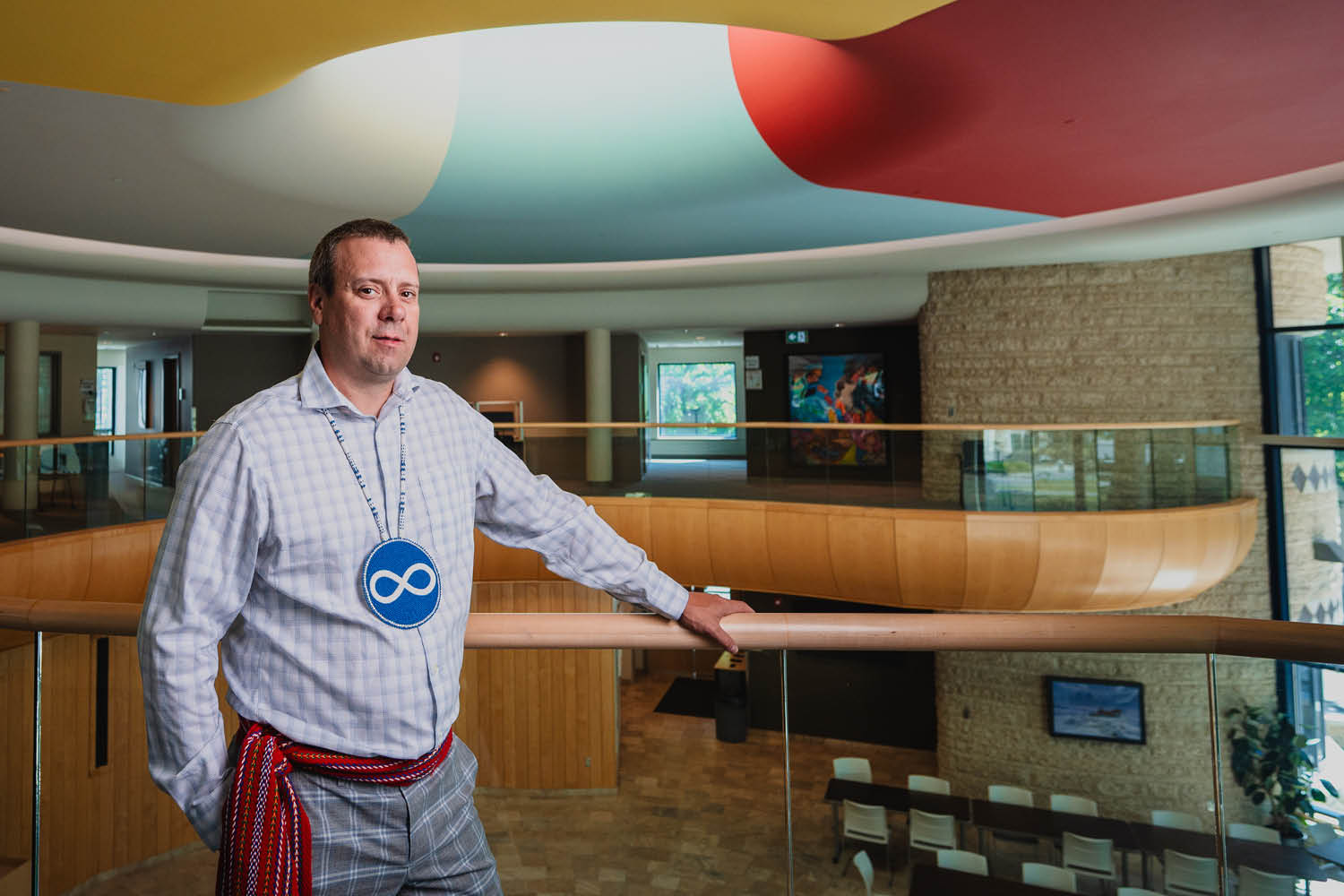
‘Just a little Métis guy from Duck Lake’
Gagnon says he wears a lot of hats at work. But with his 20-years of experience in education and management, he also brings a lot of insight.
“I started my career as a teacher but started down an administrative path shortly thereafter. For me, management comes naturally. This job is always about learning and adapting, which I really enjoy.”
When Gagnon first started in his position at the college, he launched a workshop series aimed at helping foster a culture of understanding around Indigenous history and approaches to land management. While the workshops have morphed into different forms of learning opportunities, the core purpose remains the same.
“Without honest conversations we’re never going to achieve the level of understanding that is required to address the reconciliation calls-to-action,” he says. “To ensure that we meet college goals, and university goals, we need to be fluid with our approach to teaching and learning. This includes learning not only in our professional lives, but in our personal lives as well.”
A lot of the day-to-day work Gagnon does can be described as relationship building. Whether it’s with community members, Indigenous leaders, staff, faculty or university leadership, Gagnon says relationships built on trust and mutual respect are what foster success in his job.
“Any Indigenization requires Indigenous engagement and Indigenous voice. We’re very fortunate in the college to have this position. I do need to give credit to leadership, both past and present, for recognizing the need to create a role like mine.”
Having grown up on a farm just outside of Duck Lake, Sask., Gagnon says going to university was not something that was regularly discussed as an option for his future. But in 2006, he set foot on the USask campus for the first time to start his Bachelor of Education through the Saskatchewan Urban Native Teacher Education Program (SUNTEP). It changed his life forever.
“I eventually went on to do my master’s degree in Educational Foundations and this fall I am going to be starting a PhD,” he says. “We talk about our journey and our story. Mine starts out as a kid who hated school and is now going to be starting a doctorate program in the fall.”
Gagnon says that earning his PhD isn’t about becoming a tenured faculty member. It’s about gaining knowledge to ensure he’s doing his best to support student success and ensure Indigenous programs are informative, respectful and meaningful.
“The thing I like the most about my job is engaging with the students, faculty and staff,” he says. “The conversations we have with each other and with our community partners lead to authentic Indigenized course content that help people understand the importance of Indigenous history and land use.”
Gagnon considers himself fortunate to work with a team of dedicated individuals who are making great strides in their work.
“I’m very proud that I get to work in a space that I love every single day. I get to be a part of training and educational opportunities that are leading to meaningful careers for Indigenous people,” he says. “I was once fortunate enough to listen to the Honourable Justice Murray Sinclair speak. His quote that education got us into this mess and education will get us out of this mess is something that always stuck with me.”