Join us to celebrate the International Year of Rangelands and Pastoralists!
The United Nations General assembly has designated 2026 as the International Year of Rangelands and Pastoralists (IYRP). The purpose of the year is to promote an understanding and appreciation of rangelands around the world and the people who use them.
The College of Agriculture and Bioresources at the University of Saskatchewan (USask), in partnership with other units on campus, is celebrating with events planned throughout the year, highlighting the rangeland and pastoralist related research and programs at USask. The events are intended to provide education and outreach to the public in partnership with industry, government and non-government organizations.
Past Events
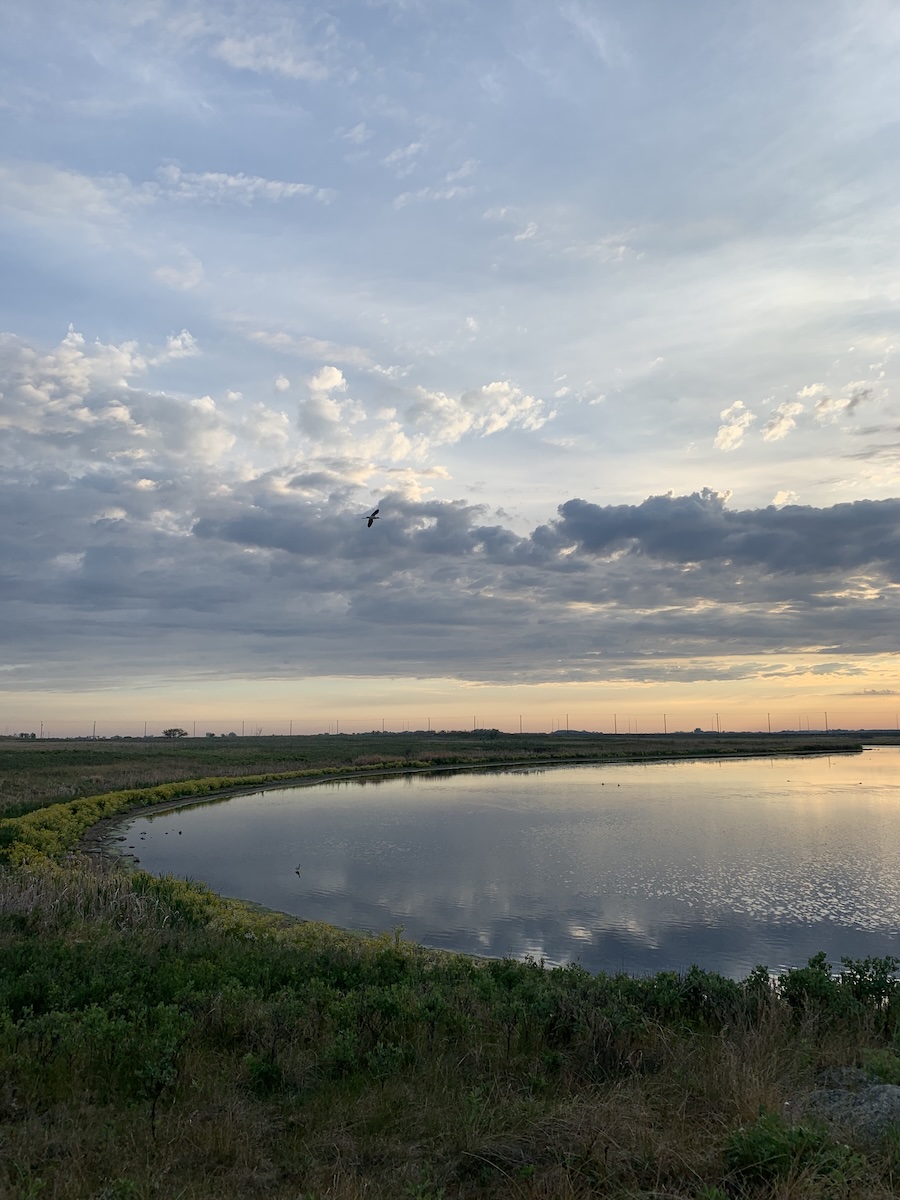
Join us to explore the grasslands as living cultural landscapes, where traditional knowledge, language, and identity are deeply connected to the land.
Thursday, August 27, 5-8 pm
Northeast Swale in Saskatoon
Join us to discuss the importance of grasslands and celebrate the International Year of Rangelands and Pastoralists. Elders Julie Pitzel, Roland Duquette, and Joseph Naytowhow will share insights into the grasslands as living cultural landscapes, where traditional knowledge, land-based practices, and language revitalization come together to sustain Indigenous heritage. Grounded in the deep relationships between people and place, this workshop highlights how stories, values, and identity are embedded within the grasslands themselves—offering a powerful perspective on their cultural and historical significance.
How to access the Northeast Swale
- By road from Central Avenue, turn right (east) on Fedoruk Drive, then turn left (north) on Range Road 3050. Parking is on the west side of the road, bordered by large rocks.
- Pin for Google maps
- Map of the Swale
This event is offered in partnership between the Meewasin Valley Authority and the kihci-okāwīmāw askiy Knowledge Centre (Plains Cree for “Great Mother Earth Knowledge Centre”) at the University of Saskatchewan.
Join us for an inspiring evening to kick-off the International Year of Rangelands and Pastoralists 2026 with a special event at the University of Saskatchewan!
This event aims to elevate awareness and spark meaningful dialogue around the sustainable management of rangelands!
The evening will feature:
- A light reception and networking opportunity
- Opening remarks highlighting the global significance of rangelands
- A keynote plenary address by Dr. Andrea Olive (PhD), a leading Canadian voice in environmental policy and conservation
- A moderated panel discussion exploring governance, management and stewardship in working rangeland landscapes from multiple perspectives
This event is free to attend and all are welcome.
Keynote: Dr. Andrea Olive (PhD), Professor, University of Toronto Mississauga
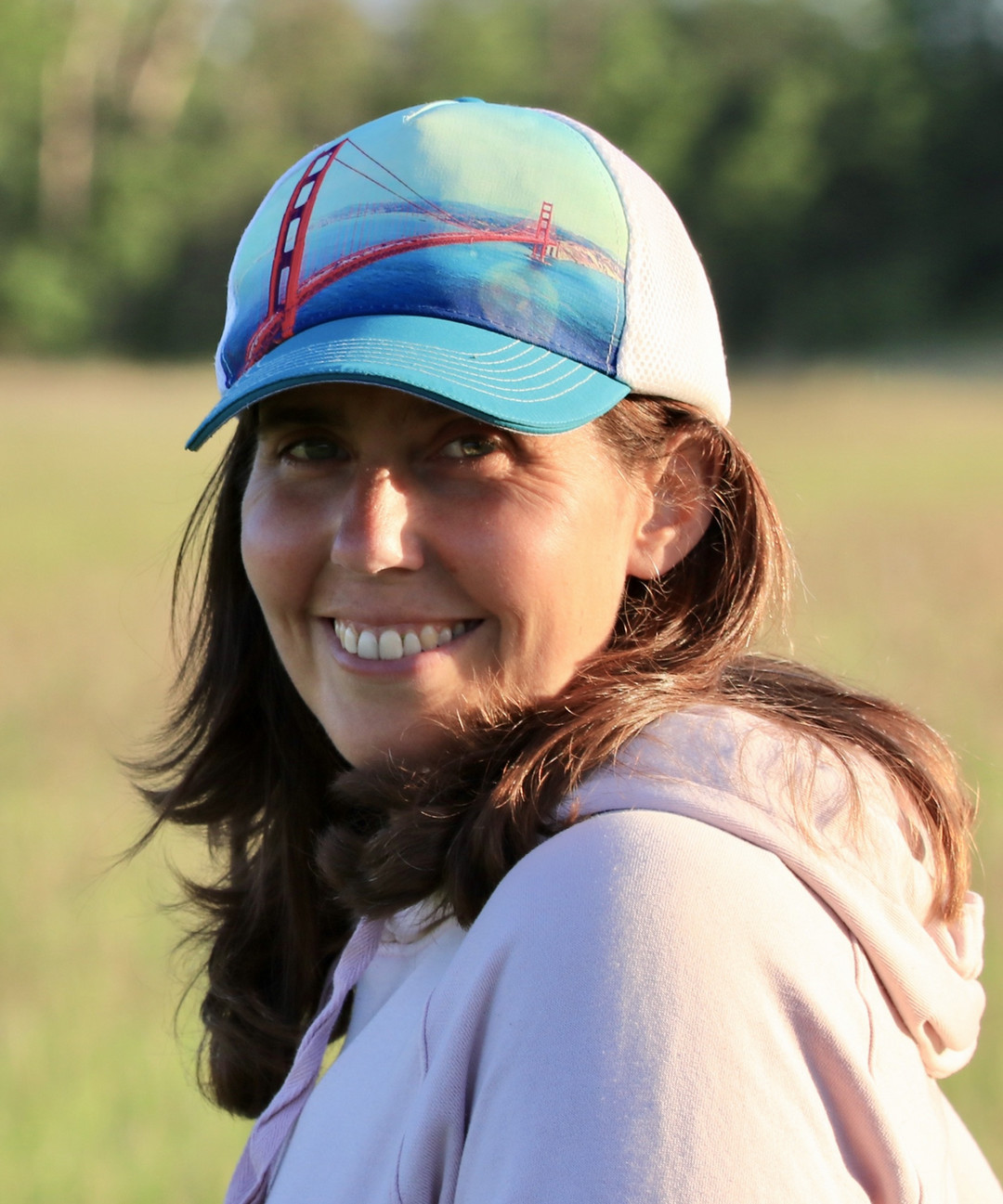 |
Dr. Olive's area of research is Canadian and American environmental policy, especially wildlife conservation. She is the author of three books and three co-edited collections as well as over 40 articles. She currently holds a SSHRC Insight Grant to investigate biodiversity conservation in working (agricultural) landscapes in the Canadian west. She teaches courses on Canadian environmental policy and wildlife policy. She supervises students in Political Science and Geography in her lab Wildlife, Land, and Sustainability. |
Panelists:
- Renny Grilz, Manager of Conservation at Meewasin Valley Authority
- Terry Lerat, Ranch Manager and Councilor with Cowessess First Nation
- Tara Mulhern Davidson, Rancher and Writer
Wednesday, January 14, 2026
Convocation Hall, USask, 107 Administration Place, Saskatoon, SK
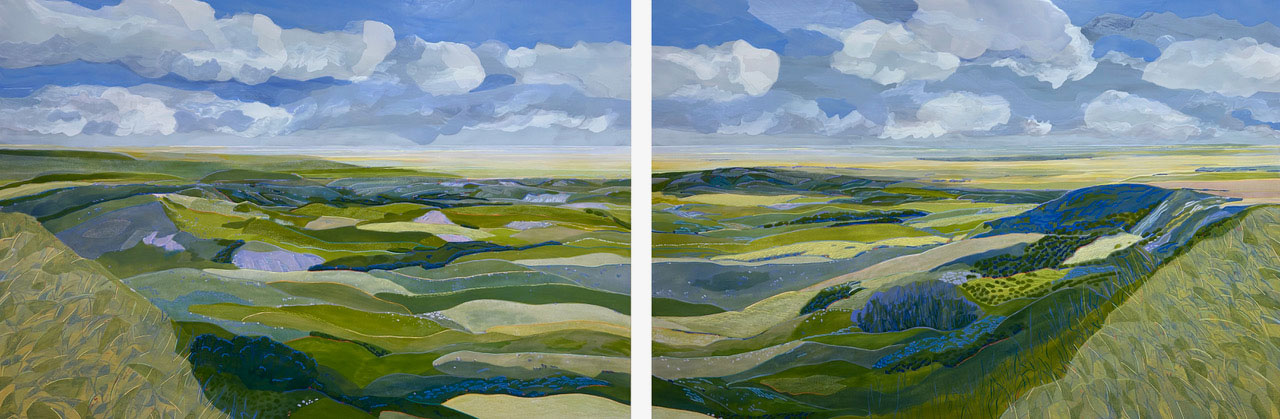 Image: Viewfinder, One of Clint's Favourite Views, Beaver Valley, H Cline Acrylic Panel 2025
Artist Talk
Heather Cline will discuss the impact of the practice and history of landscape painting on her artistic development in the context of her most recent collaboration with the Nature Conservancy of Canada, a body of artwork entitled ‘Viewfinder’. Cline will share stories from the field and her experience of observing the land from the passenger seat of a Cessna Skyhawk, touching on the challenges and rewards of an art practice based in public engagement.
Heather Cline is a professional visual artist based in Saskatchewan. Cline has a deep interest in public interaction and has participated in residency programs and community engagement across Canada. Her activities have included setting up a ‘Story Collection’ office from an inner-city store front in Oshawa, Ontario and riding along on combines in rural Manitoba.
Cline has her MFA from the University of Saskatchewan and has exhibited in multiple group exhibitions, with solo exhibitions throughout Canada. Her work is in public and private collections across North America and Europe, including the Colart Collection, the Mendel Collection at the Remai Modern, the Dunlop Art Gallery, the Saskatchewan Legislature, the Saskatchewan Arts Board and Global Affairs Canada.
Wednesday, January 14,
Rounding Space, Kenderdine Gallery, Agriculture Building (second floor), USask
Workshop
Join artist and educator Lorna Conquergood to learn about the stratification, sprouting, transplanting, and seed collection stages in prairie habitat gardening.
Participants will plant Yellow Prairie Cone Flower seeds in DIY milk jug greenhouses. To complete the workshop the greenhouses are placed outside in the snow to begin the cold stratification process.
Sowing seeds in the Rounding Space (Kenderdine Gallery), the planting process is contextualized in relation to historical and contemporary art practices which engage with land and ecology.
This workshop is developed in partnership with One School One Farm, an organization who collaboratively plans and plants diverse habitats that support pollinators, sequester carbon, prevent erosion, and maintain the water cycle with a vision of “healthier people through healthier land”.
One School One Farm is dedicating 2026 as the year of the Yellow Prairie Cone Flower.
Wednesday, January 14
Rounding Space, Kenderdine Gallery, Agriculture Building (second floor), USask
Advancements in Agricultural Research is a seminar series presented by the University of Saskatchewan (USask) College of Agriculture and Bioresources featuring individuals conducting agricultural research across USask.
This exhibition is now closed.
Kenderdine Gallery, Agriculture Building (second floor), USask
This installation is a part of a body of work entitled ‘Viewfinder’, a collaborative project between Heather Cline and the Nature Conservancy of Canada. Artwork inspired by viewing the landscape through a conservation lens, walking the land with staff and stakeholders of the Nature Conservancy of Canada.
Cline has created a muti-media installation incorporating paintings, audio works and video that offer an immersive experience of the land. The initial fieldwork for ‘Viewfinder’ consisted of a series of one-on-one encounters with each project participant in their environment. The goal was to have meaningful exchanges on the land that impacted Cline’s renderings of the landscape. Cline documented these walks through audio recordings, video recordings, and an aerial survey of the sites from the viewpoint of a Cessna Skyhawk airplane. Key encounters on the ground were marked through the collection of GPS points that were used to create the flight plans over each location. This has translated into a series of paintings of the landscape that capture some of the shared experiences on the land with the project’s key participants. The exhibition also features video documentation of participants walking through the different project sites and an archive of short explanatory videos featuring the activities of project participants on the land.
Nature Conservancy of Canada
The Nature Conservancy of Canada (NCC) is Canada's leading national land conservation organization. In Saskatchewan, NCC has secured more than 170 properties and has helped to conserve over 198,219 hectares of ecologically significant land and water in Saskatchewan.
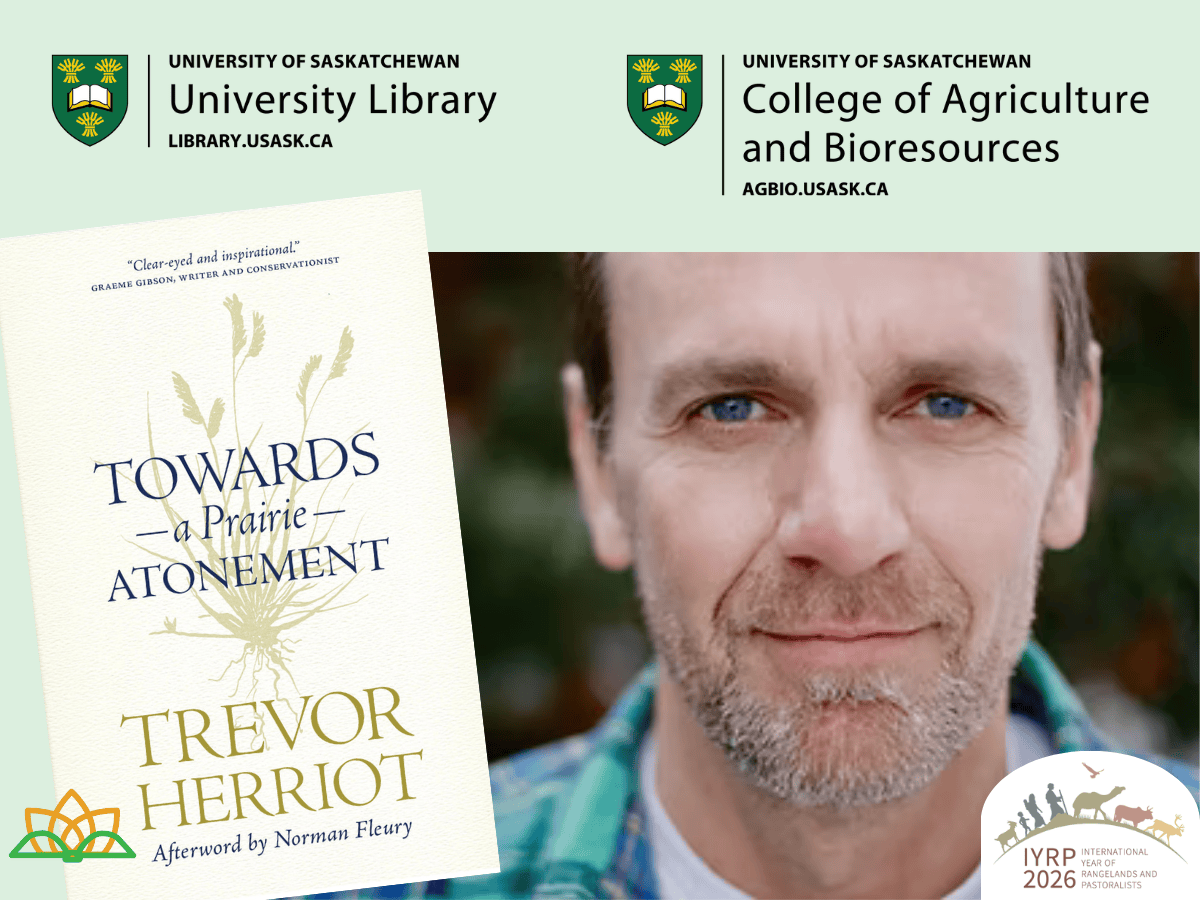
One Book, One Province Saskatchewan is a community reading initiative in support of the International Year of the Rangelands and Pastoralists.
This year, we’re exploring Towards a Prairie Atonement by local activist and author Trevor Herriot. In the wake of colonization, this work examines two centuries of Métis presence on the prairies in a powerful, reflective work that invites readers to think deeply about land, responsibility, and our relationships with the prairie.
The book is available free as an ebook through the USask Library or through the Saskatoon Public Library, and no prior book club experience is required. Each session features a light, guided discussion in a welcoming and inclusive environment, and the book club culminates in a final event featuring author Trevor Herriot on April 1.
Book Club Schedule
Part 1: One Tent Peg to Share (pp. 3–24)
Wednesday, February 4, 2026
12:00–1:00 PM
Murray Library, Room 145
Part 2: On the Sand Plains (pp. 25–88)
Wednesday, February 25, 2026
12:00–1:00 PM
AgBio 2C61
Part 3: A Pasture to Share & A Small Good Thing afterward (pp. 87–125)
Thursday, March 26, 2026
12:00–1:00 PM
Murray Library, Room 145
Wednesday, April 1, 2026
11:30am - 1:00pm
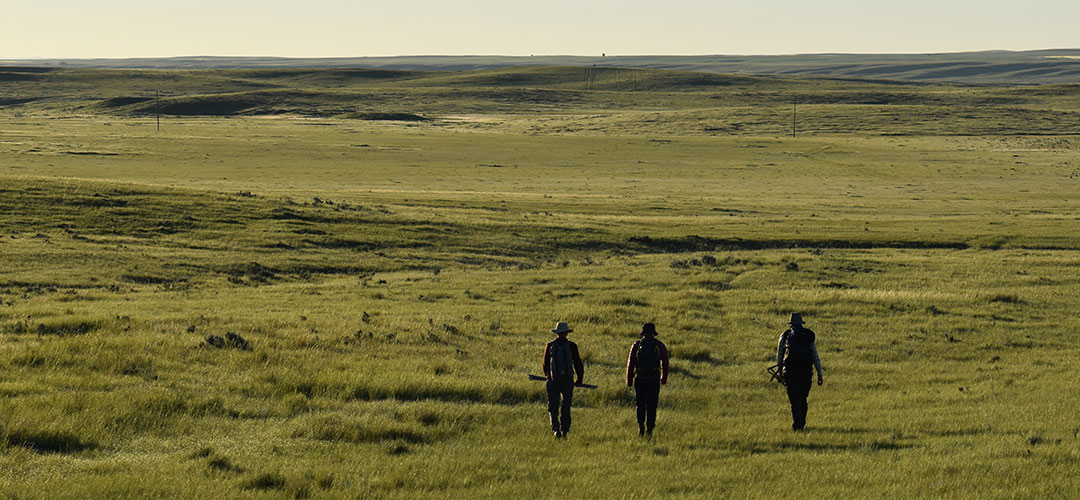
Join us for a field tour! This tour will provide participants an opportunity to walk on native grassland guided by an expert in grassland ecology and plant identification!
Biddulph Natural Area
Saturday, May 9, 1-3:30pm
Join grassland ecologist Eric Lamb for a guided hike through the Biddulph Natural Area. Biddulph is a mosaic of native grasslands over stabilized sand dunes, forest, and wetland that supports more than 300 plant species and a population of the threatened Gibsons Big Sand Tiger Beetle.
Location
HWY 219, 2.5km north of Whitecap Dakota First Nation. Drive south on HWY 219 toward Dakota Dunes. Site is approximately 2.5km north of the turnoff to Dakota Dunes Casino. Park in the marked location on the grass east of highway.
Join us for a field tour! This tour will provide participants an opportunity to walk on native grassland guided by an expert in grassland ecology and plant identification!
Kernen Prairie
Wednesday, May 13, 6:30-8pm
Join grassland ecologist Eric Lamb for a guided walk through the Kernen Prairie, one of the largest remaining patches of Fescue Prairie in Saskatchewan!
Location
Kernen Prairie, University of Saskatchewan, Kernen Research Farm. Enter Kernen Research Farm via the main gate. Drive through the farmyard, and follow the road 1.5km north into the research fields. Park on the right side of the road. Please note that the Research Farm gate will close at 6:40 pm and you will be unable to enter after that time. When leaving pull your vehicle up to the gate. The gate will automatically open and close behind you.