


“Be prepared for big things” from the Nutrien Centre for Sustainable and Digital Agriculture
New collaborative hub is now being created in USask’s College of Agriculture and Bioresources.
By Joanne PaulsonWhen Nutrien announced a $15 million donation to the University of Saskatchewan (USask) in February— with a large portion going to a new centre within the College of Agriculture and Bioresources (AgBio)—its founding director did not hold back on expressing the vision for the exciting new venture.
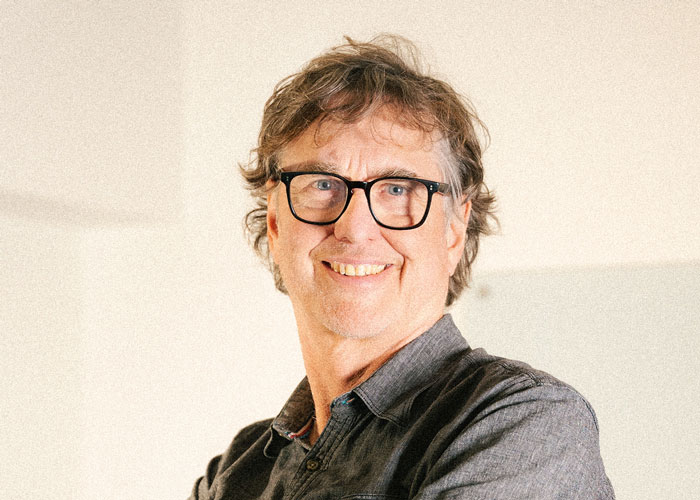
“Be prepared for big things,” Dr. Steve Shirtliffe (PhD) remembers telling those assembled at the event.
“We are unabashedly ambitious, and we are building it out to become a world-class centre.”
Thus, the concept of an interdisciplinary high-tech agriculture hub, which had been under discussion for two years, became the Nutrien Centre for Sustainable and Digital Agriculture.
Soon to occupy part of the first floor of the Agriculture Building, the centre has a massive purpose: applying digital technology to increase the sustainability of agriculture.
It is not a small nor a limited endeavour. For College of AgBio Dean Dr. Angela Bedard-Haughn (PhD), sustainability has three main aspects: economic, environmental, and social.
“All those pieces come together to make something that is actually sustainable,” she said. “If we’re thinking about an environmentally sustainable practice in agriculture, if it’s not economically sustainable or if it’s somehow damaging to the social fabric, then that’s not actually sustainable.”
She noted that USask, as well as Western Canada, is already “doing a lot of great work” in sustainability.
“There are all kinds of data to support that we have one of the lowest environmental footprints in terms of agricultural production, large-scale annual crop production as well as livestock production. How can we continue to raise the bar? How can we continue to do better?”
The relatively new world of digital technology, from satellite mapping, drone use, data collection and associated crop and soil evaluation, will indeed raise that bar.
“Digital agriculture in the broadest sense is agriculture that is leveraging the power of large data sets, and those might be collected by a producer through their yield monitors; data collected through soil sampling, crop scouting. Farmers are constantly collecting data about their sites,” the dean said.
“It’s also the development of new tools to measure the sustainability, so not just remote sensing but maybe the development of sensors that we can use in the field to get more rapid measurement than our traditional approaches of taking a sample back to the lab for chemical analyses.”
Staff and collaboration
Bedard-Haughn broached the idea of becoming the centre’s first director to Shirtliffe, a professor in the Department of Plant Sciences, in December. He didn’t think twice before agreeing.
“I was ... yeah. Put me in coach,” he said.
“I feel extremely privileged. I’ve thought a lot about this. People talk about a once-in-a-lifetime opportunity, but to get the chance to be part of the team that builds a new centre, to lead that, it’s more than you can even hope for.”
Shirtliffe and his team run the existing agronomic crop imaging lab, which includes a field research program. It started about 10 years ago, when he bought a drone, started flying it with a post-doctoral student, and applied for funding.
He was part of a team that landed the largest research grant USask had ever received at the time.
“That allowed us to really get going, really to establish ourselves in this area of digital agriculture,” he said.
They moved into larger scale satellite modelling of crop production, crop yields, soils and weather, as well as other agri-environmental predictions, such as estimating nitrous oxide emissions.
“We’re in the process of moving to doing wall-to-wall mapping for all of Western Canada for all the cropland in Canada. It’s quite unique,” he said.
“That process is indeed going to be the first research platform that the centre officially offers. We’re bringing other people into this digital sandbox, if you will. We have all this data available.”
The “sandbox” will welcome scientists from all over campus and beyond, the dean noted.
“This was a natural growth out of collaborations that are already happening,” she said.
“Through some of the previous projects that had previously been done on campus, there had been relationships with engineering and computer science and the people you would expect collaborating in the digital agriculture space.”
That network is expanding through a recent cluster hire of five new AgBio faculty members in sustainable and digital agriculture: four are in place, and the fifth will arrive in January 2026.
“We view it as a collaborative space with some people permanently there managing the data,” added Shirtliffe.
“We will have a concierge type of position where people can bring in data they have—maybe someone doing work on the effect of land cover on the density of birds, like Dr. Christy Morrissey (PhD) is doing over in biology, and have the geospatial data to model what environment, ground cover, and farm management variables are driving their species abundance.”
Training and the future
The centre will also offer a spectrum of training, from workshops to formal certificates and degrees.
“A lot of the folks working on digital ag right now evolved into this over the course of their careers,” said Bedard-Haughn. “And now we are at that stage where there are bright young scientists that have explicitly trained in this space and are the future in this area of research.”
Shirtliffe said a precision agriculture certificate is already in place. It began two years ago and has been an enormous success beyond his wildest dreams. The first year accepted 90 students, but it was so popular that the introductory course had to be expanded and now has 130 students.
The centre also supports an advanced precision agriculture course and yet another new course is being developed by Dr. Bryan Mood (PhD) in agricultural global geographic information systems (GIS).
Shirtliffe hopes that within two to five years, there will be resources to add a certificate at the post-graduate level, so graduates can take the courses online. The centre will also provide more visibility for a graduate-level computational agriculture program that was developed by faculty in Plant Sciences and Computer Science.
The physical space for the centre will be created off the Agriculture Building’s atrium.
On the outside will be an outreach display that people can interact with to understand what’s happening on the land around them. Shirtliffe expects to also develop apps for farmers—and others—on the outreach side.
“People always relate to the sense of place they have here in Saskatchewan,” Shirtliffe said. “In some cases, they’ll be able to see historic photos of farmyards, how variable the land is, what the weather is like, the soils, the crop growth.”
Precision animal management will also be incorporated into the centre’s offerings, as well as a collaboration zone and space to meet with stakeholders, which is important because the centre plans to partner with industry as well.
“The space is going to have a high-tech feel, with glass so people can see in, and hopefully we will continue to catalyze this interest in digital agriculture. Our grand goal is to make Saskatchewan a centre for digital agriculture as we are for conservation agriculture,” he said.
Having all this geospatial data of multiple layers at very high resolution allows researchers to model all sorts of processes, from crop yield to ecosystem processes and productivity, he added.
“We can use machine learning, which is a form of artificial intelligence, and take data from various areas of Western Canada and use that to train a model to predict on a much larger area. If we have a good enough data set, we can predict on all of Western Canada,” Shirtliffe said. “That’s the kind of magic we’re offering.”
Bedard-Haughn said the Nutrien Centre for Sustainable and Digital Agriculture comes at a critical time in human history, when we need to think hard about global food security.
“This is not about creating the newest and greatest computers for the wealthiest farmers,” she said. “This encompasses everything from how we work with satellite imagery to developing smartphone apps that can be used by small farmers in developing countries.
“We essentially need to do more with less. We’re not creating more land, but we do have more people, we do have more mouths to feed, and we need to produce more food and do it in a way that is sustainable for our future.”