

Black History Month: Meet Dr. Kwabena Nketia
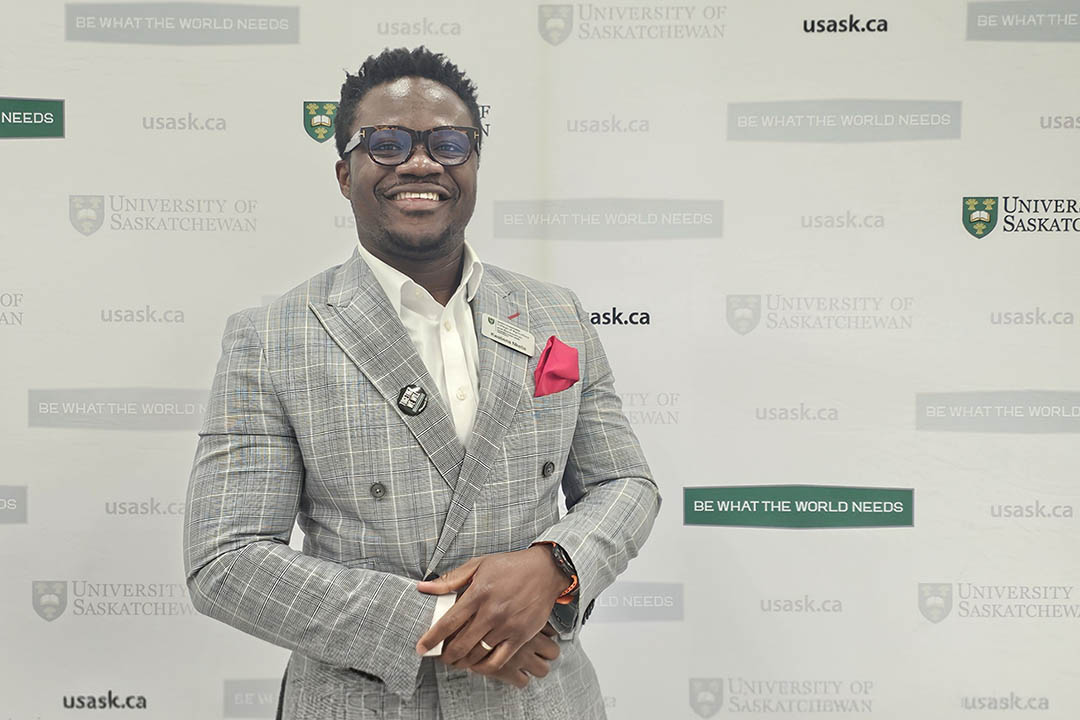
University of Saskatchewan (USask) researcher Dr. Kwabena Nketia (PhD) has worked and travelled around the world, but it is at USask where he has found a place “to truly be what the world needs.”
By AgBio Communications“USask’s motto, ‘Be what the world needs,’ strongly resonates with me,” said Nketia. “The university is globally recognized for agriculture and sustainability research and is built around a diverse and collaborative community.”
Nketia’s research supports digital agronomy and big data analytics, integrating digital agriculture technologies with artificial intelligence to enhance sustainability, resilience, productivity, and profitability of cropping systems.
“The strong connections between researchers, farmers, industry, and government make USask an ideal place for applied, impact-driven research. The scale of Prairie agriculture also provides a unique living laboratory for digital agriculture.”
Nketia joined USask’s College of Agriculture and Bioresources as an assistant professor in the Department of Plant Sciences in April 2025. Prior to becoming an assistant professor, Nketia was a post-doctoral researcher working with USask researcher Dr. Steve Shirtliffe (PhD).
Nketia is also a management member of the new Nutrien Centre of Sustainable and Digital Agriculture in the College of Agriculture and Bioresources.
For Black History Month, we asked Nketia to discuss his research and what influenced his career path.
What does your research focus on?
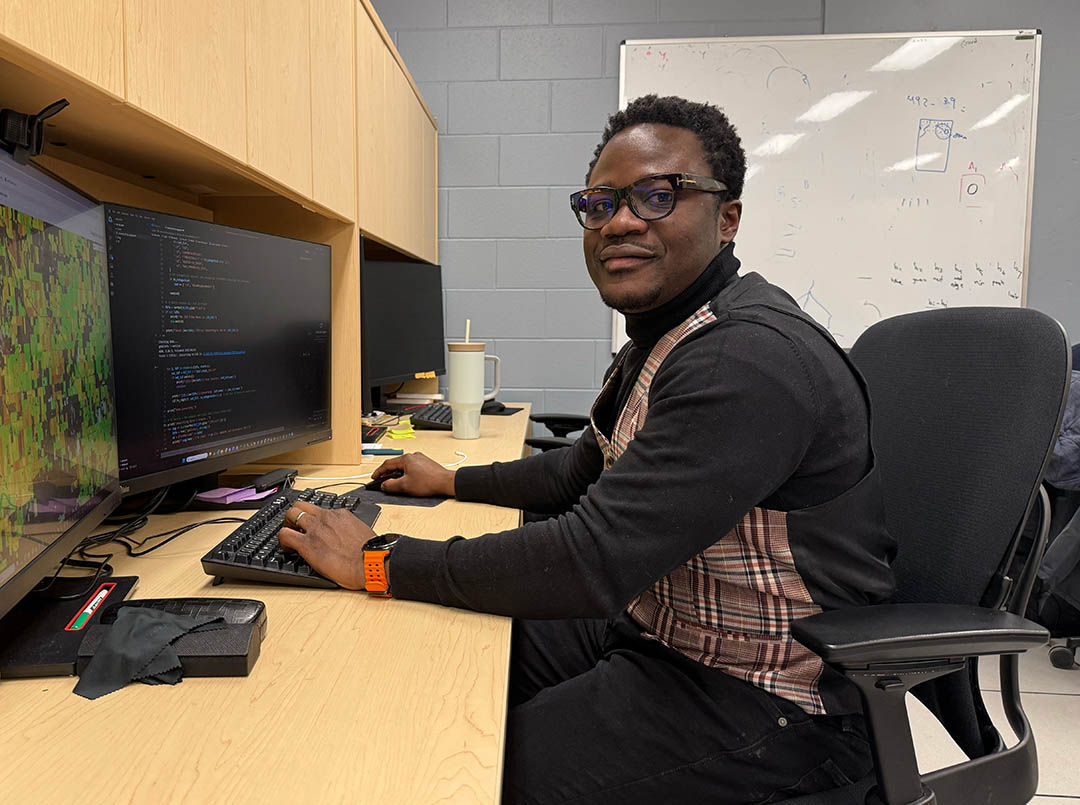
My research focuses on using new digital tools in agriculture to better understand how crops, soils, and the atmosphere interact across space and time. I combine field measurements, satellite images, and computer models to study how crops grow, why yields vary within and between fields, how soils behave, and how farming practices affect the environment. My goal is to put useful information directly into the hands of farmers so they can make better decisions, use land more efficiently, farm more sustainably, and remain profitable.
How did you develop an interest in this topic?
I grew up and was trained in Ghana, where farming is core to people’s livelihoods, food security, and the environment. Early in my career, I worked directly with farmers and land managers and saw how poor crop and soil information, and unpredictable weather made farming more difficult and less productive. My training in geomatic engineering and soil science led me to digital agriculture, where I use field measurements, maps, satellites, and data to turn complex environmental information into practical solutions farmers can use. That mix of real-world challenges and modern technology is what shaped my research path.
What research project are you currently working on?
One major project I am working on asks whether we can use freely available data about our planet (such as satellite and drone images, and weather information) together with Artificial Intelligence to understand where crops perform well, where they struggle, and why. We aim to do this at a previously unattainable scale of individual fields, but across millions of acres of Canadian farmland. For this project I am working with colleagues at USask, including Dr. Steve Shirtliffe, and a multidisciplinary team of students, agronomists, and researchers from fields such as computer science, soil science, geography and biology.
Why is this research important?
My research addresses practical questions that matter to everyone, including food production, climate change, and environmental protection. By improving how land, farm inputs (such as fertilizer and water), and crops are managed, my work can help reduce costs for farmers, lower greenhouse gas emissions, protect soil and water resources, and support long-term food security. The results can also provide evidence that inform public policy related to climate action, sustainable agriculture, and responsible land use planning.
My research helps producers understand why some areas of a field yield more than others and why some land may be better suited for different uses. This allows farmers to apply inputs like fertilizer and water only where they are needed, which saves money and reduces environmental impacts. Over time, this approach supports more sustainable farming systems that balance productivity with soil health and climate protection.
What inspires you in your work and research?
I’m inspired by the idea that good data can improve people’s lives while also helping farmers remain profitable. What motivates me most is seeing research move from field trials, maps, and computer models into real decisions that support farmers, protect the environment, and build resilient food systems. I also find great purpose in contributing to a world where food is available for everyone and in training the next generation of practitioners who will carry this work forward.
What’s an interesting aspect of your research that most people wouldn’t know?
Many people don’t realize that satellites can detect crop flowering stages, estimate soil moisture below the surface, and even identify areas where greenhouse gas emissions are more likely. Today, we can study farms in fine detail from space in near real time, and automate the process, something that was impossible just a decade ago.