

Innovation in non-ruminant nutrition for a healthier future
USask’s Dr. Deborah Adewole (PhD) looks to make non-ruminant animal production more sustainable through cost-effective and nutritional alternative feed ingredients.
By Jane CaulfieldNon-ruminant animals—animals with a single-compartment stomach—play a big role in food security contributing to global food production, the global economy, and overall environmental sustainability. This means that the care of these animals is a significant part of production success, and it all starts with what we feed them.
“Nutrition is a significant part of animal production, as it plays a crucial role in many other aspects, including animal health and welfare, production economics, and it even determines the impact of production on environmental sustainability,” said University of Saskatchewan (USask) College of Agriculture and Bioresources researcher Dr. Deborah Adewole (PhD). “My research questions emerged from a combination of industry challenges, consumer demands, economic and sustainability factors, and regulatory shifts in the way food animals are produced.”
A lot of Adewole’s research aims to find economical alternative feed ingredients from locally available resources, without sacrificing productivity.
“I aim to help producers find cost-effective alternative feed ingredients to maintain productivity using locally available resources while reducing reliance on conventional feed ingredients, especially those that compete with human food and are thus quite expensive,” said Adewole.
She also wants to support industry as it moves towards cage-free, free-range, or enriched environments to improve animal performance through nutrition. Other real-world benefits of her research include reducing antibiotic use in livestock and improving animal health and resilience.
“I collaborate with organizations, including industry associations at the provincial and national levels, and feed additive companies to make my research more useful and impactful,” said Adewole. “As is evident, even though our research focuses on animals, it offers significant impact on human health, environmental sustainability, and producer profitability.”
Research that benefits producers and consumers
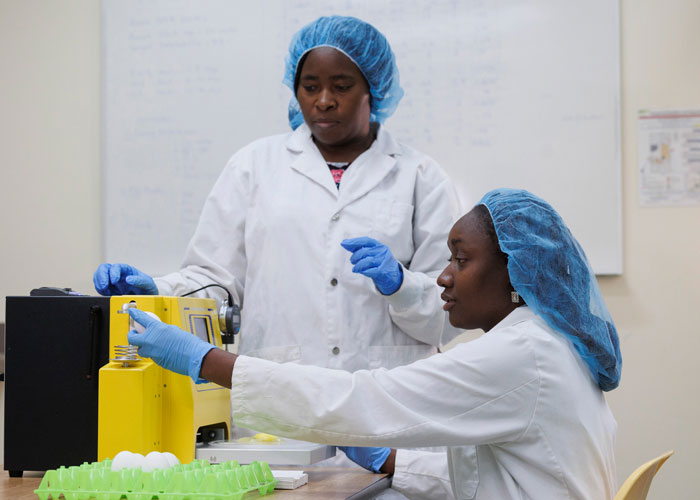
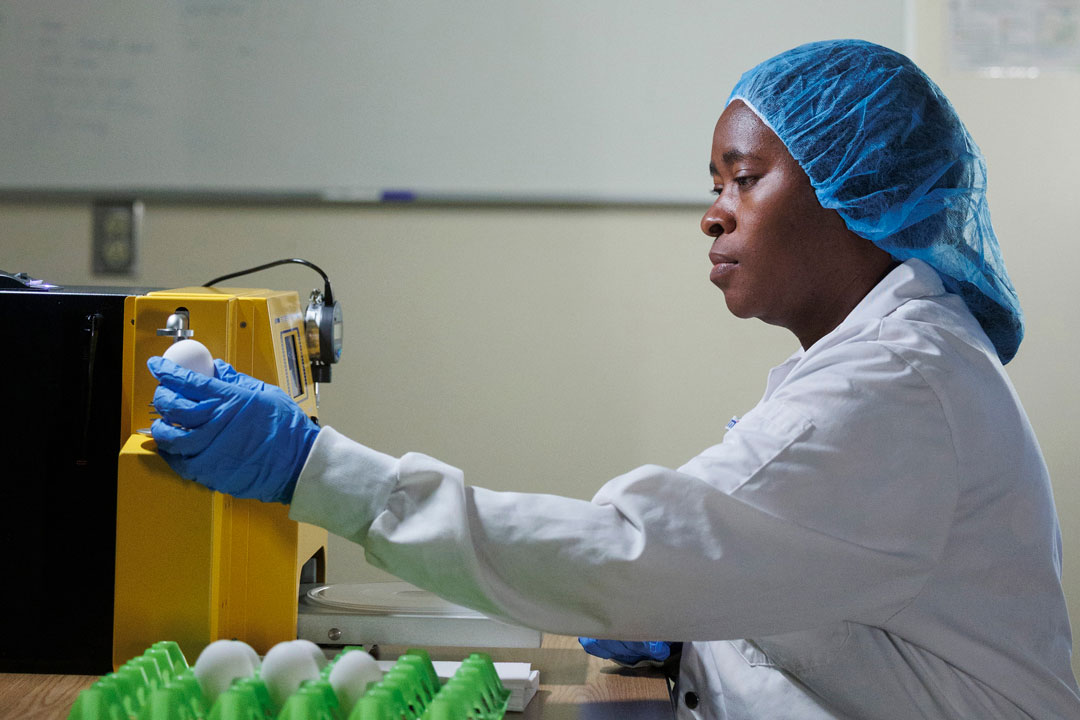
Her most recent publication explores the use of ahiflower seed and presscake in poultry nutrition, showing an increase in omega-3 fatty acids in egg yolk—a polyunsaturated fat linked to improved heart health in humans.
“The ahiflower press cake is a waste product that can be sourced locally in Canada,” said Adewole. “Globally, my research lab is the first to utilize ahiflower seed and press cake in poultry nutrition. That is the kind of novelty my lab offers the industry as we support them in finding practical solutions to prevailing challenges.”
Her research also explores reducing the need for antibiotic use in livestock using bioactive substances—work that is crucial for combating antimicrobial resistance and meeting consumer demand for antibiotic-free meat and egg products.
“My research also explores how natural additives including probiotics, essential oils and microencapsulated multivitamins can improve gut morphology, microbiome, immune response, and overall resilience of animals under heat stress and cold stress, leading to healthier animals, lower mortality rates, and better productivity and profitability for farmers,” she said.
Inspiring young farmers around the world

Adewole and her husband co-founded an organization called International Youths in Canadian Agriculture (IYCA), which is dedicated to empowering young people, particularly international students, to build meaningful careers in agriculture.
“We focus on bridging the gap between youth and the agricultural industry by offering mentorship, education support, one-on-one training, and career development,” said Adewole.
The not-for-profit organization recruits and guides young people and those who are new to Canada into agricultural education, helping them find meaningful career pathways by connecting them with mentors, industry professionals, and hands-on training programs.
“Agriculture is the backbone of society, and we are committed to helping youth discover meaningful pathways into careers in the industry,” she said.
From coastline to Prairie skies
Adewole joined the USask Department of Animal and Poultry Science as an assistant professor in 2023. Prior to this, she was an assistant professor and research chair in the Department of Animal Science and Aquaculture at Dalhousie University in Halifax. She says the college’s ability to collaborate with industry leaders and government institutions to ensure research that is practical, impactful, and aligned with industry needs was an attractive quality.
“USask offers a unique blend of history, innovation, and infrastructure that supports cutting-edge research in the field of agriculture. Being a global leader in agricultural research, USask also offers robust opportunities to train undergraduate and graduate students and early-career researchers,” said Adewole.